Stamped Concrete Driveways: A Complete Guide
A stamped concrete driveway gives you the appearance of stone, brick, slate or even timber while retaining the strength and practicality of a poured concrete surface. For Central Coast and Lake Macquarie homeowners, it offers a versatile way to create a premium-looking driveway without installing individual pavers or natural stone.
Also known as patterned or imprinted concrete, stamped concrete can be customised through different patterns, colours and textures. The result can complement everything from a coastal home to a traditional brick property or contemporary new build.
What Is a Stamped Concrete Driveway?
A stamped concrete driveway is poured as a concrete slab and then textured with moulds or stamping mats while the surface is still workable. These mats reproduce the shapes and textures of materials such as natural stone, cobblestone, brick, slate and timber.
Colour can also be incorporated into the finish. Depending on the required appearance and installation method, contractors can use integral colour, surface-applied colour or contrasting release agents to add depth and definition to the stamped pattern.
The key difference from pavers is that stamped concrete remains a concrete slab rather than being assembled from hundreds of individual units. You get the visual detail of a patterned surface without joints between separate pavers across the entire driveway.
How Is a Stamped Concrete Driveway Installed?
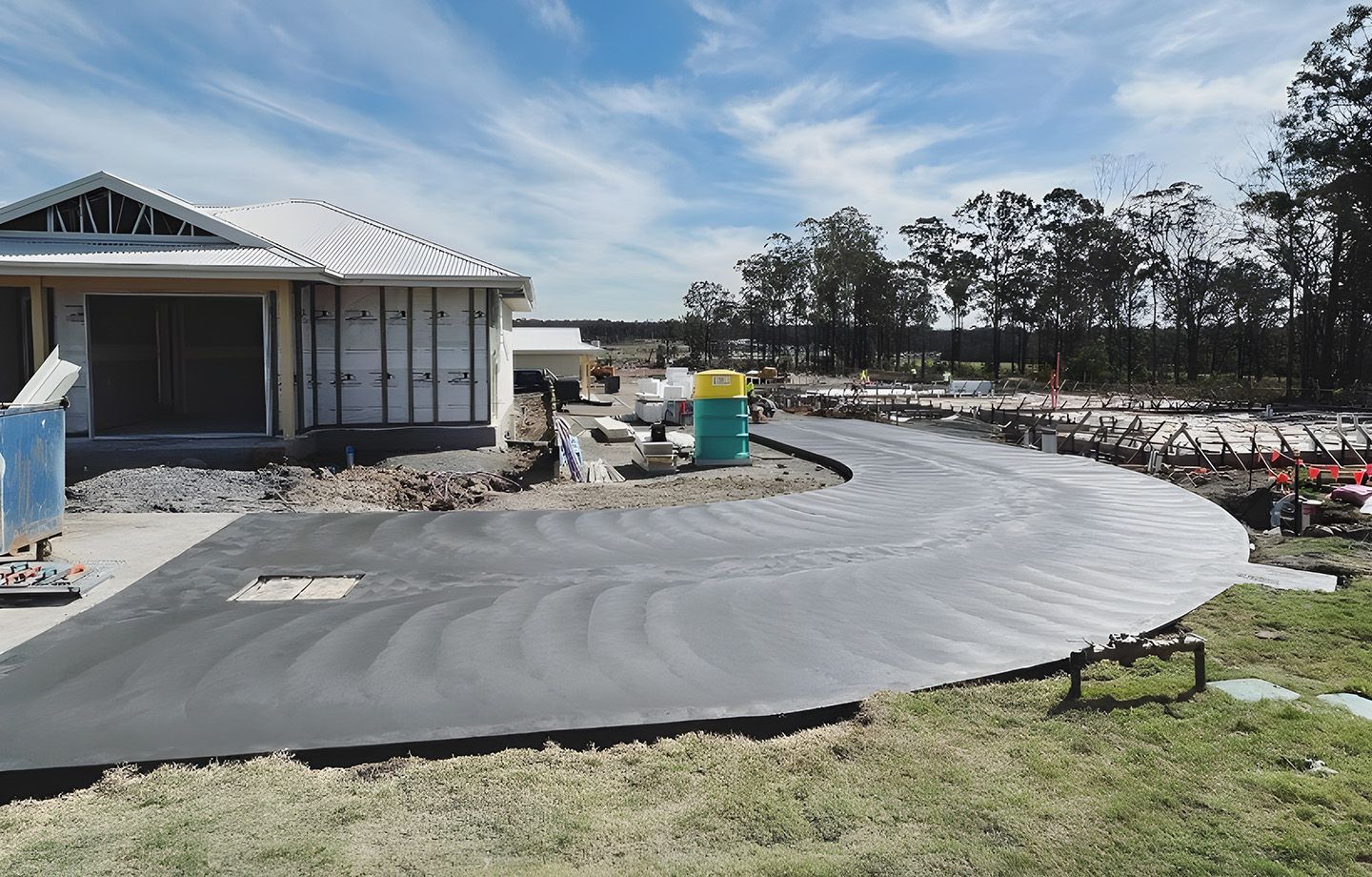
A quality stamped driveway requires more than pressing a pattern into wet concrete. Site preparation, drainage, reinforcement, concrete placement and finishing all affect how the completed driveway performs.
A typical installation follows these steps:
- Prepare the site. The driveway area is excavated and prepared to establish the required levels, base and drainage.
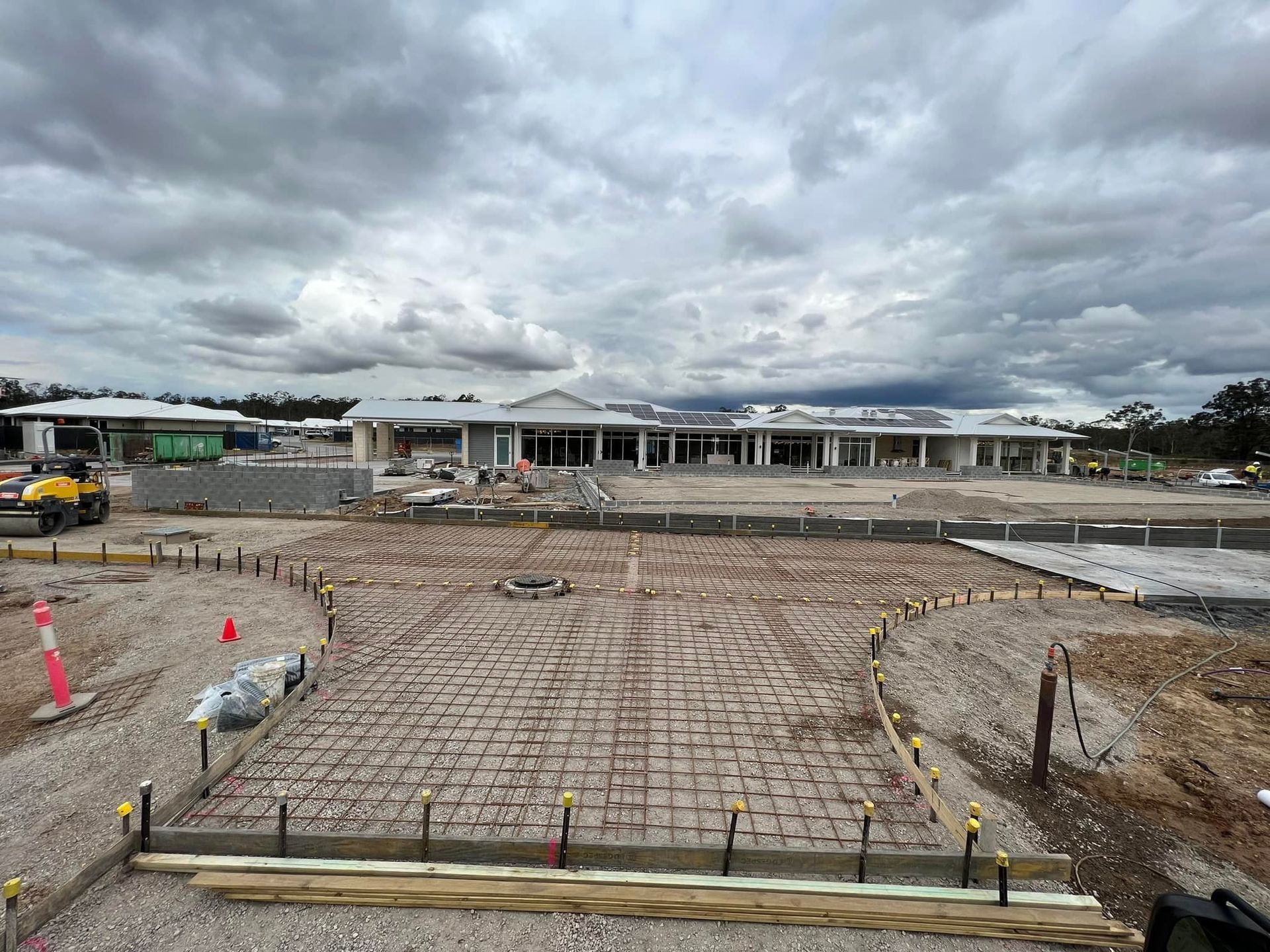
- Set the formwork and reinforcement. Formwork establishes the driveway dimensions, while reinforcement is installed according to the requirements of the project.
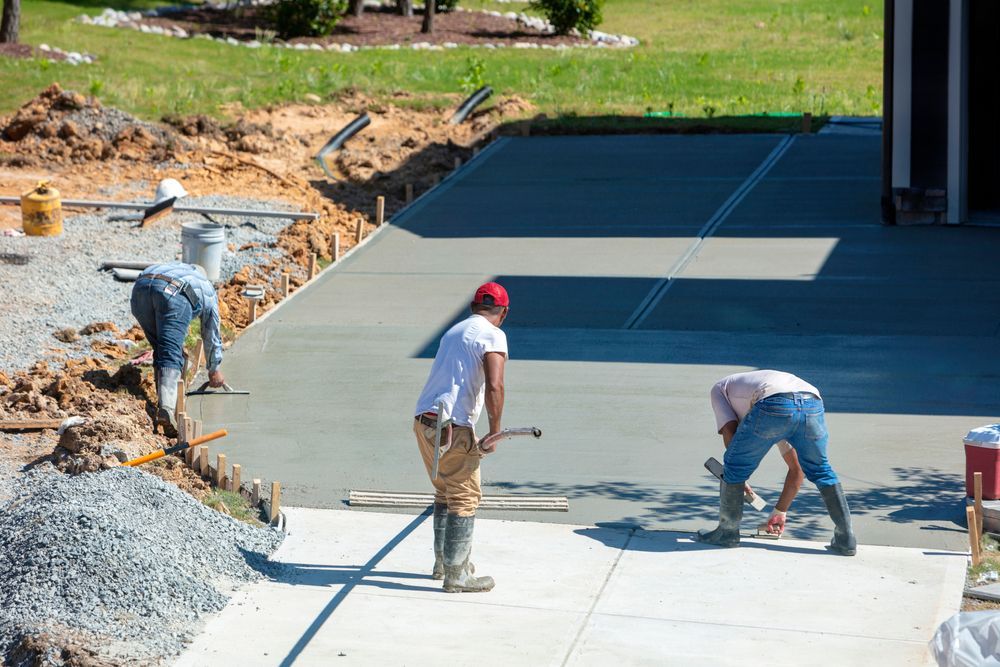
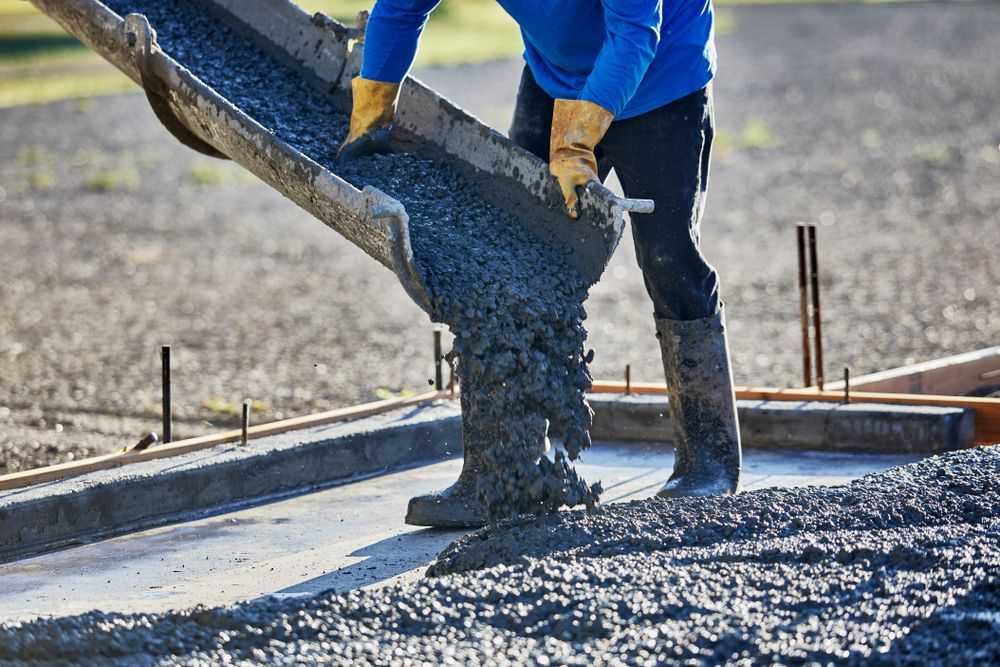
- Pour and level the concrete. Concrete is placed and worked to the required levels and falls.
- Apply the selected colour and release system. The exact process depends on the finish and colouring method being used.
- Stamp the pattern. Stamping mats are positioned and pressed into the concrete at the correct stage of curing to create a consistent pattern and texture.
- Complete detailing and joints. Edges, control joints and other details are finished as required.
- Clean and seal the surface. Once the concrete has reached the appropriate stage, the driveway can be cleaned and sealed to protect the decorative finish.
- Timing matters during stamping. If contractors begin too early, the pattern may deform the concrete excessively. Leave it too late and the surface can become too firm to reproduce the intended texture cleanly.
For homeowners considering different concrete driveway finishes on the Central Coast, installation quality is just as important as the pattern itself. A decorative finish still needs the correct base preparation, falls and concrete construction underneath it.
What Stamped Concrete Patterns Are Available in Australia?
Stamped concrete patterns in Australia can recreate a broad range of traditional and contemporary materials. The best choice depends on your home, driveway size and how prominent you want the pattern to appear.
Common options include:
- Ashlar and cut-stone patterns
- Slate textures
- Cobblestone and European-style paving
- Brick and running-bond patterns
- Random stone patterns
- Large-format stone or tile effects
- Timber plank and wood-grain textures
Larger patterns can work particularly well on broad driveways because they create texture without making the surface look overly busy. Smaller brick or cobblestone patterns can suit traditional homes, pathways and defined entrance areas.
Consider the surrounding materials before choosing a stamp. For example, reproducing a warm stone texture can tie a driveway into sandstone-coloured retaining walls, while a darker slate-style finish may suit a modern home with charcoal roofing and dark exterior details.
What Colour Options Work for a Stamped Concrete Driveway?
Colour is one of the main reasons stamped concrete can look more realistic than a simple patterned surface. Instead of relying on a single flat colour, the finish can incorporate tonal variation that emphasises the texture created by the stamping process.
Popular directions include warm sandstone and earthy tones, natural greys, charcoal shades and brown or terracotta-inspired colours. The right choice should work with the home's roof, façade, landscaping and other hard surfaces rather than being selected in isolation.
A coloured concrete driveway also needs to be considered in local conditions. Very dark surfaces can become noticeably hot in direct summer sun, while very light finishes may make dirt, tyre marks and staining more visible.
For example, a Central Coast homeowner with a light rendered façade, sandstone landscaping and a coastal garden might choose a natural stone pattern with warm grey and sandstone tones. This can create visual interest without making the driveway compete with the rest of the property.
How Does Stamped Concrete Compare With Exposed Aggregate?
The choice between stamped concrete vs exposed aggregate largely comes down to the appearance and surface texture you want.
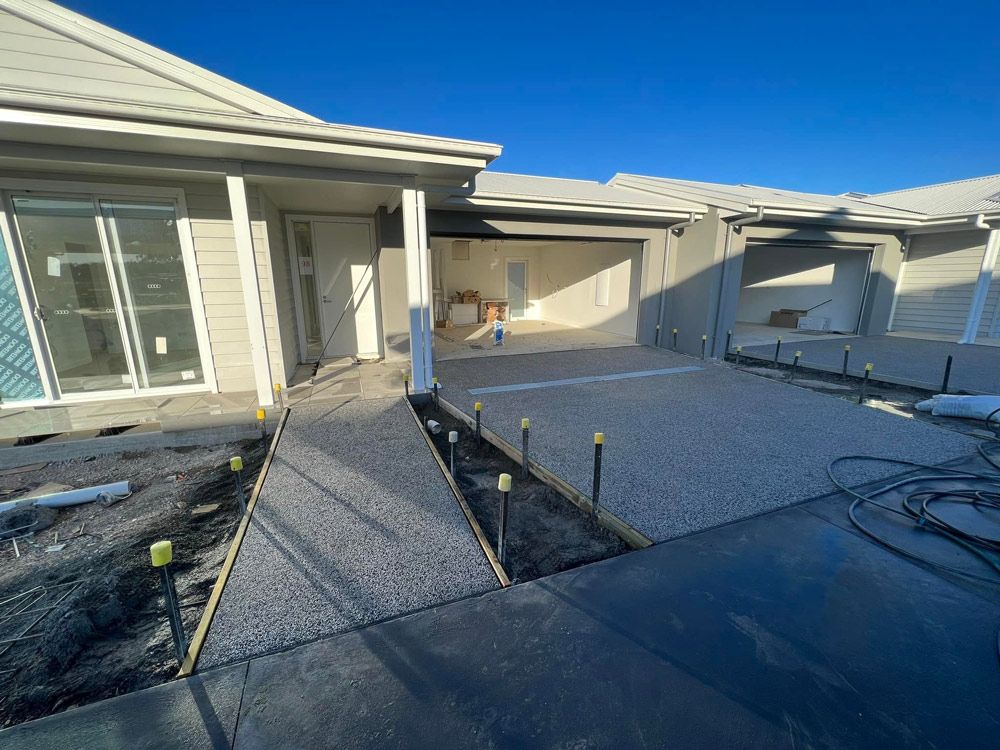
Stamped concrete uses moulds to create a defined pattern resembling another material. Exposed aggregate reveals the stones within the concrete mix, creating a textured finish with a more organic, granular appearance.
Stamped concrete may be the better fit when your priority is recreating a particular architectural material such as slate, stone or brick. It provides considerably more control over the pattern and can become a prominent design feature at the front of a property.
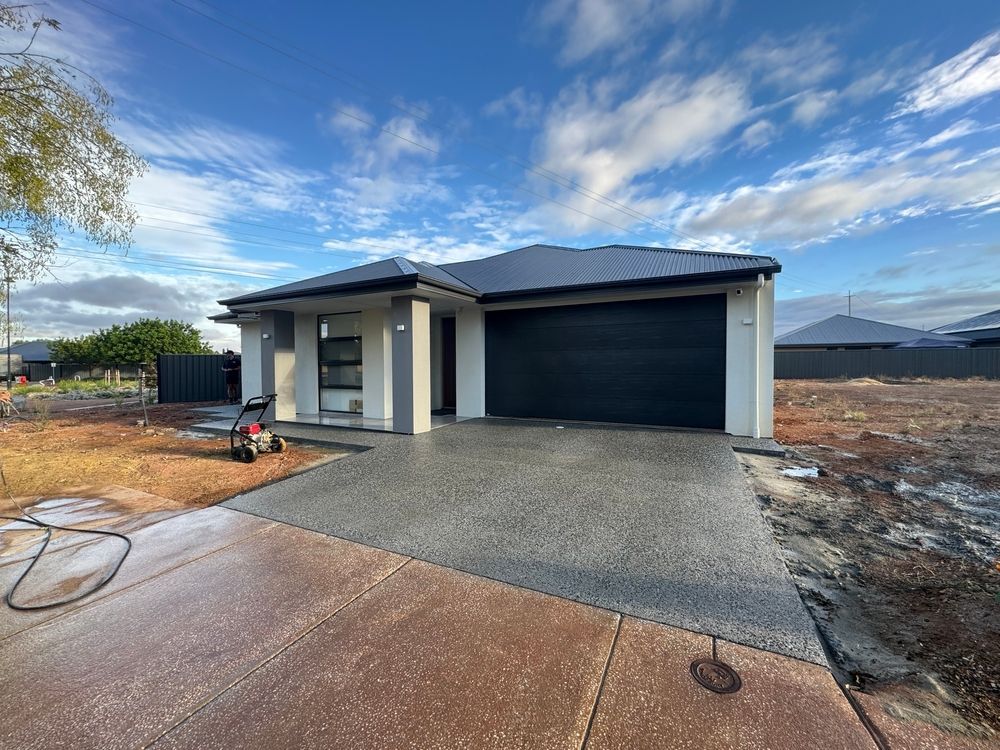
Exposed aggregate offers a different aesthetic. Rather than imitating another surface, the aggregate itself provides the colour and texture. It is widely used for contemporary driveways, paths and outdoor concrete areas.
Neither option should be chosen on appearance alone. Consider the home's architecture, required surface characteristics, maintenance expectations and overall project budget.
Choosing the perfect finish for your Central Coast concrete driveway comes down to how the surface will be used, your budget and the look you're trying to achieve.
How Does Stamped Concrete Compare With Plain Concrete?
Plain concrete is generally the simpler choice. It creates a clean, functional driveway without the additional labour and materials involved in colouring and stamping a decorative surface.
Stamped concrete is designed for homeowners who want the driveway to contribute more strongly to the appearance of the property. Because a driveway can occupy a significant part of the front of a home, changing its colour and texture can have a substantial visual impact.
The additional finishing work means stamped concrete will generally cost more than a basic plain concrete driveway. That extra cost goes towards creating the decorative appearance rather than changing the fundamental purpose of the driveway.
If aesthetics are a high priority, a decorative concrete driveway can bridge the gap between standard concrete and surfaces made from individual pavers or natural stone.
How Much Does a Stamped Concrete Driveway Cost?
There is no single stamped concrete driveway cost that applies to every property. According to industry best practice, contractors should assess the site and project requirements before providing an accurate quotation.
Factors that can affect the price include:
- Total driveway area
- Excavation and site preparation
- Site access
- Concrete specifications
- Reinforcement requirements
- Drainage and required falls
- Pattern complexity
- Colouring system
- Borders and other decorative details
- Sealing requirements
- The condition and slope of the site
A straightforward driveway on an accessible, relatively level site will involve different preparation from a sloping block with restricted machinery access or substantial excavation requirements.
Pattern complexity also matters. A relatively simple stamped finish may require less detailed work than a design involving multiple colours, contrasting borders or intricate pattern changes.
For an accurate figure, arrange an assessment based on the actual property rather than relying on generic square-metre pricing online.
Is Stamped Concrete Cheaper Than Pavers or Natural Stone?
Stamped concrete can provide the appearance of premium paving materials without requiring individual stone or paving units to be installed across the entire area. However, the exact price difference depends on the materials, pattern, preparation and design involved.
Natural stone can vary considerably in material and installation cost, while paver pricing depends on the chosen product and the complexity of laying it. Stamped concrete has its own additional costs for decorative finishing, colouring and sealing.
The maintenance requirements are also different. Paved surfaces contain numerous joints where weeds or movement can become a consideration over time. Stamped concrete remains a slab, although it still requires correctly positioned joints and can develop cracks like other concrete surfaces.
For a
decorative concrete driveway in Lake Macquarie, stamped finishes are worth considering if you want premium aesthetics without using individual pavers or natural stone across the whole driveway.
How Do You Maintain a Stamped Concrete Driveway?
Stamped concrete is relatively straightforward to maintain, but it is not maintenance-free. Regular cleaning and appropriate resealing help preserve its appearance and protect the decorative surface.
Remove leaves, soil and other debris rather than allowing organic material to remain on the driveway for extended periods. Clean spills promptly, particularly oils and other substances that could mark the surface.
The sealer should also be monitored as the driveway ages. How frequently it needs attention depends on the sealer, exposure, traffic and site conditions, so follow the recommendations for the particular system installed rather than relying on a fixed schedule.
Avoid assuming that a decorative surface makes the underlying concrete immune to normal wear or cracking. Correct construction practices, appropriate control joints and ongoing care remain important.
Is Stamped Concrete Slippery?
Stamped concrete can have different levels of slip resistance depending on its texture, sealer and final treatment. This is particularly important for sloping driveways, areas exposed to rain and surfaces around pools or frequently wet landscaping.
A heavily textured stamp can provide more surface profile than a smooth finish, but the complete system needs to be considered. Some sealers can alter how the surface behaves when wet.
Discuss slip resistance with your concreter during the finish-selection stage, particularly if the driveway has a significant gradient. Appearance should not be the only consideration when choosing the surface.
Is a Stamped Concrete Driveway Right for Your Home?
Stamped concrete is particularly well suited to homeowners who want concrete's practicality while placing greater emphasis on the appearance of their driveway.
It may be worth considering if you:
- Like the appearance of stone, slate, brick or timber
- Want greater choice over driveway colour and texture
- Want the driveway to complement specific architectural features
- Prefer a continuous concrete slab over individual pavers
- Are prepared to maintain the decorative surface and sealer over time
The most effective designs usually work with the property rather than treating the driveway as a standalone feature. Pattern scale, colour, borders and surrounding landscaping should all form part of the decision.
Before committing to a finish, it can also help to inspect completed projects rather than relying only on small colour samples. You can
view our work to see examples of driveways and concrete projects completed across the region.
Why Choose Stamped Concrete on the Central Coast and Lake Macquarie?
Homes across the Central Coast and Lake Macquarie range from coastal renovations and contemporary builds to established brick properties, so there is no single decorative driveway finish that suits every site.
Stamped concrete offers the flexibility to adapt the pattern and colour to the property. A subtle stone texture can complement a modern coastal home, while brick, cobblestone or slate-inspired finishes can create a more traditional appearance.
Local site conditions also matter. Access, slope, drainage, existing landscaping and how the driveway connects to the street or garage can all influence the construction approach.
The key takeaway is simple: a stamped concrete driveway can deliver the visual character of stone, brick, slate or timber while retaining the practical advantages of a poured concrete driveway. The best results come from choosing the pattern and colour alongside the technical requirements of the site, rather than treating the decorative finish as an afterthought.
Coastal Kerb and Concrete can help you plan a driveway that suits your property, preferred finish and site requirements. Our team installs
stamped concrete driveways Central Coast homeowners can tailor with different decorative options, and we also service Lake Macquarie.
Contact our team to discuss your driveway, preferred look and site requirements and arrange a quote.
Frequently Asked Questions About Stamped Concrete Driveways