How To Clean And Maintain Your Concrete Driveway
Regular sweeping, gentle washing, prompt stain removal and occasional resealing can help keep your concrete driveway in good condition for years. For homeowners seeking advice from concreters Lake Macquarie locals trust, the most important thing is to address small problems before they become larger repairs. Around Lake Macquarie and the Central Coast, coastal air, moisture and seasonal rain make consistent driveway maintenance particularly worthwhile.
Why Driveway Maintenance Matters: Advice From Concreters in Lake Macquarie
Concrete is durable, but everyday vehicle traffic, dirt, oil and weather exposure gradually affect its surface. Shaded driveways can develop moss and algae, while poor drainage may allow water to collect around cracks and edges. Regular cleaning helps you identify these issues early.
Good maintenance also protects the appearance of decorative finishes and suitable sealed surfaces. If you're considering a new driveway, our guide to
why concrete is the best choice for your driveways explains the material's advantages.
How to Clean a Concrete Driveway: Step by Step
Routine driveway cleaning doesn't need harsh chemicals or aggressive pressure washing.
- Sweep the surface. Remove leaves, sand, dirt and debris with an outdoor broom.
- Rinse with water. Use a garden hose to loosen surface grime without washing debris into stormwater drains.
- Apply a suitable cleaner. Choose a mild product compatible with your concrete finish and test it on a small area.
- Scrub stubborn sections. Use a suitable brush rather than abrasive metal tools.
- Rinse thoroughly. Follow the cleaner's disposal instructions and keep contaminated water out of stormwater systems.
- Inspect the driveway. Once dry, look for cracks, stains, flaking or areas where water collects.
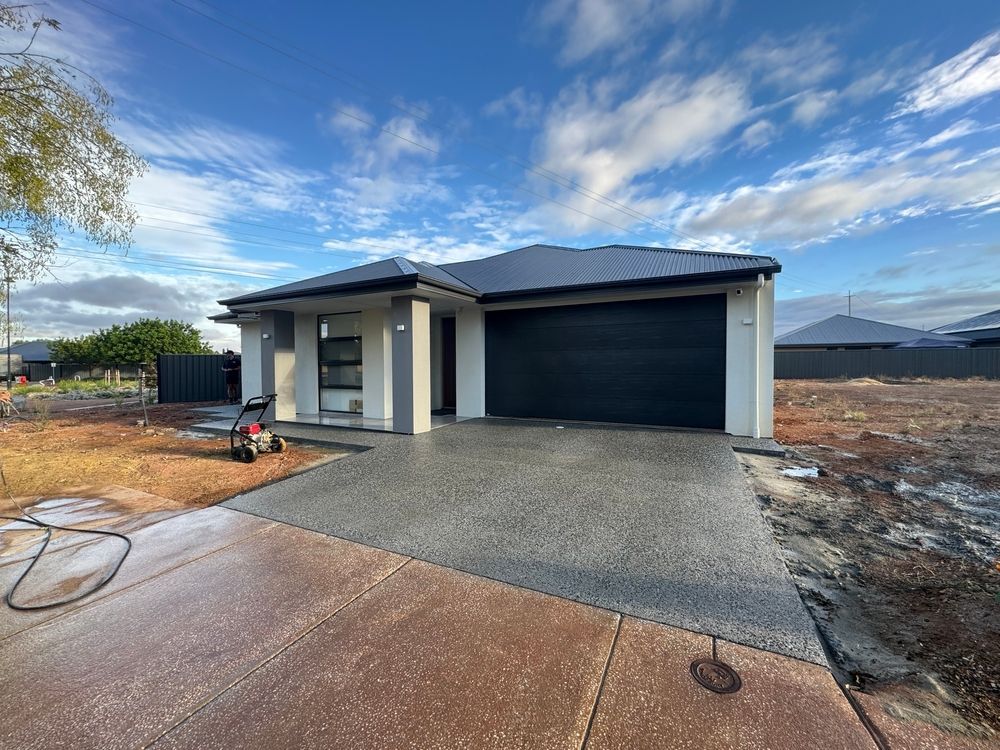
For coloured concrete, exposed aggregate or sealed surfaces, always check that your cleaning products are compatible with the finish.
How to Remove Stains From a Concrete Driveway (Oil, Tyre Marks and Moss)
Different stains require different treatment. Start with the gentlest suitable method.
How Do You Remove Oil Stains?
Absorb fresh oil promptly using an appropriate absorbent material. Then apply a concrete-compatible degreaser according to its instructions. Older stains may need repeated treatment, and deeply absorbed discolouration may remain. Never wash oily residue into stormwater drains.
How Do You Remove Tyre Marks?
Tyre marks often develop where vehicles brake, turn or park. Try a mild concrete-safe cleaner and a brush. For stubborn marks, use a compatible specialist product after testing a small section.
How Do You Remove Moss and Algae?
Moss and algae commonly grow on damp, shaded concrete. Carefully remove loose growth and use a suitable concrete-safe treatment if needed. Check nearby drainage, overhanging vegetation and accumulated leaves, as these conditions may encourage regrowth.
Example: A Belmont homeowner repeatedly finds moss along a shaded driveway edge. Cleaning removes the growth, but leaves keep blocking a nearby drain. Clearing the drainage path helps address the conditions contributing to the problem.
Concrete Driveway Cleaning Tips: What to Avoid
Concrete can withstand everyday use, but incorrect cleaning methods may damage its surface. Avoid:
- Excessive pressure washing: High-pressure jets can damage older surfaces, decorative finishes or sealers.
- Strong acids: These may etch or discolour concrete.
- Incompatible chemicals: Some products damage protective coatings.
- Metal brushes: Abrasive tools can scratch decorative finishes.
- Ignoring spills: Oil becomes harder to remove once absorbed.
- Poor wastewater management: Keep cleaning chemicals and contaminants out of stormwater drains.
For newly installed concrete, follow the concreter's curing and cleaning instructions before applying products or using pressure-cleaning equipment.
How to Seal a Concrete Driveway and How Often to Do It
Sealing can help suitable concrete surfaces resist staining and moisture penetration. However, the correct product and resealing interval depend on the concrete finish, existing coating, traffic and weather exposure.
How Do You Seal a Concrete Driveway?
The general process involves:
- Inspecting the concrete for damage and existing coatings.
- Thoroughly cleaning the surface.
- Allowing it to dry as required.
- Choosing a compatible sealer.
- Applying the product according to its instructions.
- Keeping traffic off until the coating has cured.
Sealing over dirt, moisture or incompatible coatings can cause peeling, cloudiness or poor adhesion.
How Often Should You Reseal?
There's no universal schedule. Look for worn coatings, dull patches, increased water absorption or stains becoming harder to clean. Follow the sealer manufacturer's recommendations and seek advice if you're unsure what product was previously applied.
For homeowners with concrete driveways on the Central Coast, regular inspection is more useful than assuming every driveway needs resealing at the same interval.
A Simple Concrete Driveway Maintenance Schedule for Coastal Conditions
A manageable routine can prevent grime and minor problems from accumulating.
| When | Maintenance Task |
|---|---|
| Weekly or as needed | Sweep leaves, sand and debris |
| After heavy rain | Check drainage and pooling water |
| When spills occur | Treat oil and other stains promptly |
| Every few months | Wash the driveway and inspect for moss |
| Periodically | Check cracks, surface wear and sealer condition |
| When damage appears | Arrange professional advice |
Driveways near trees or in shaded areas may need more frequent cleaning than exposed surfaces. For coastal properties, also watch for windblown sand, salt residue and moisture collecting around edges.
How Long Does Concrete Last When It’s Looked After?
A well-designed, properly installed and maintained concrete driveway can last for decades. Its actual lifespan depends on ground preparation, drainage, concrete quality, vehicle loads and environmental exposure.
Regular cleaning and suitable sealing help protect the surface, but maintenance cannot correct every underlying problem. For example, cleaning won't resolve ongoing ground movement or poor drainage beneath the slab. The best approach combines routine care with early attention to cracking, sinking or surface deterioration.
When to Call Concreters in Lake Macquarie for Repairs or Re-Sealing
Most routine cleaning is manageable for homeowners, but certain warning signs deserve professional assessment. Contact a concreter if you notice:
- Cracks that are widening or spreading.
- Sections lifting, sinking or becoming uneven.
- Significant surface flaking or deterioration.
- Persistent pooling water.
- Damaged driveway edges.
- Peeling coatings that may need specialist preparation.
Decorative finishes, including exposed aggregate and coloured concrete, may also need particular care when resealing. The key takeaway is simple: keep your driveway clean, maintain good drainage and investigate damage early. Consistent maintenance helps protect both its appearance and long-term performance.
Coastal Kerb & Concrete Pty Ltd works across Lake Macquarie and the Central Coast. If your driveway has cracking, surface damage or coating problems,
speak with our concreters Lake Macquarie team about suitable next steps, or
get a free quote for your project.
Frequently Asked Questions