How to Plan a Concrete Patio in Lake Macquarie: What Homeowners Need to Know Before They Start
Planning a concrete patio comes down to five decisions: size, layout, finish, drainage and approvals. Get these right before the first quote and you'll save time, money and rework. If you're creating an outdoor entertaining space, experienced concreters in Lake Macquarie can help you turn a bare backyard into a functional, low-maintenance patio that lasts for decades.
This guide walks you through each planning stage, from measuring your space to comparing finishes and preparing for pour day, so you know exactly what to expect before work begins on your concrete patio in Lake Macquarie.
What Should You Think About Before Calling a Concreter?
Start with how you'll actually use the space. A patio for a six-seater outdoor dining setting has different requirements to one built around a barbecue area, a fire pit or a spa. Walk your backyard and note where the sun sits in the afternoon, where water pools after rain and how the patio will connect to your back door, lawn or pool area.
It also helps to gather a few reference photos before you make contact. Searching patio ideas across NSW homes will show you how other blocks of a similar size and slope have been handled. A concreter can give you a far more accurate quote when you arrive with measurements, photos and a clear idea of the finish you're after.
How Big Should Your Concrete Patio Be?
As a general guide, allow around three metres by three metres for a small café-style setting and at least four metres by five metres for a full outdoor dining and lounge area. Anything smaller tends to feel cramped once furniture, planters and foot traffic are factored in.
Layout matters just as much as size. Consider:
- Clearance around furniture so chairs slide out without hitting walls or edges
- Access paths connecting the patio to doors, clotheslines & garden beds
- Roof lines & eaves if you plan to cover the area later
- Future additions such as a pergola, outdoor kitchen or spa slab
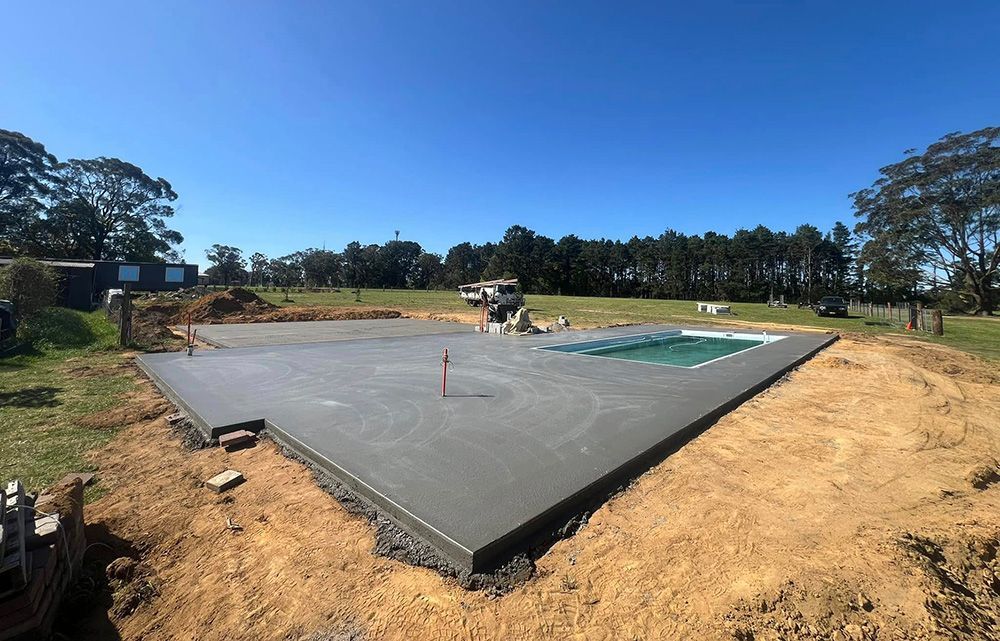
Pouring a slightly larger outdoor concrete slab now is usually more cost-effective than extending it in a few years, as extensions require joins that can be difficult to colour-match.
Which Concrete Finish Suits Your Patio?
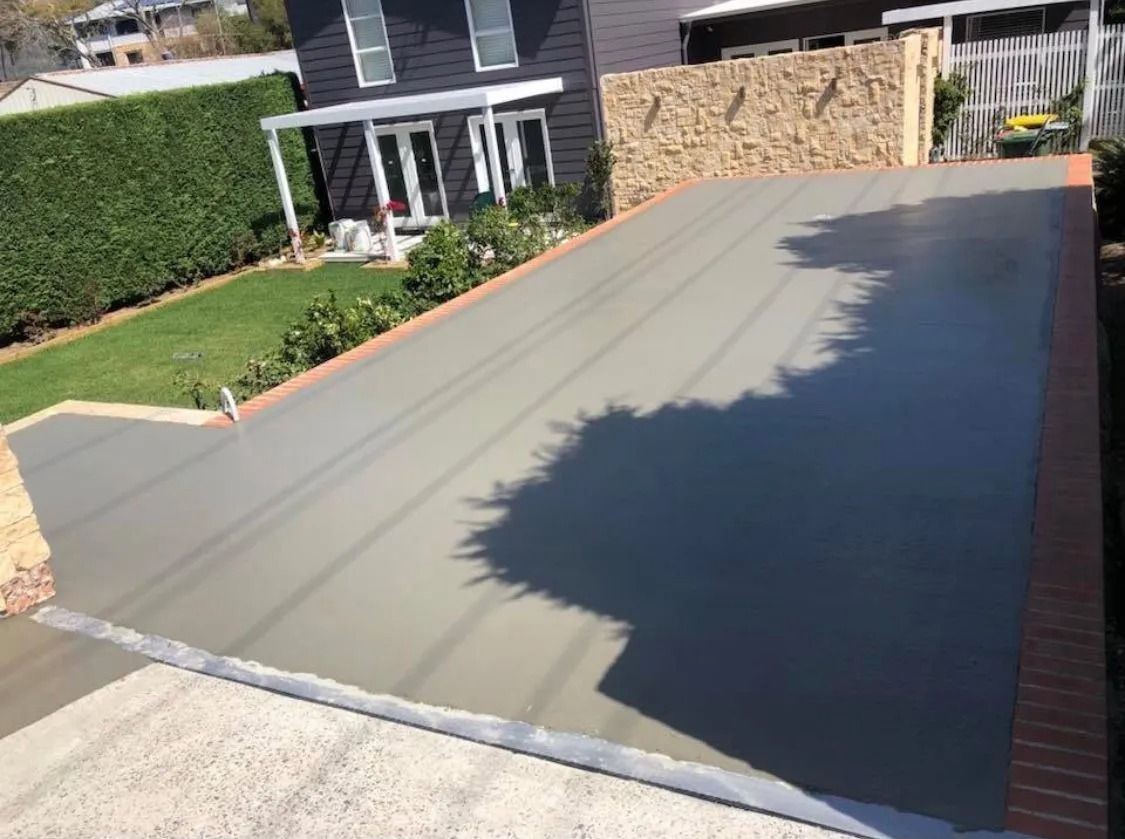
The finish determines how your patio looks, how it feels underfoot and how much grip it offers when wet. Plain concrete is the most budget-friendly option and suits modern, minimalist homes. It can be sealed for stain resistance and finished with a light broom texture for grip.
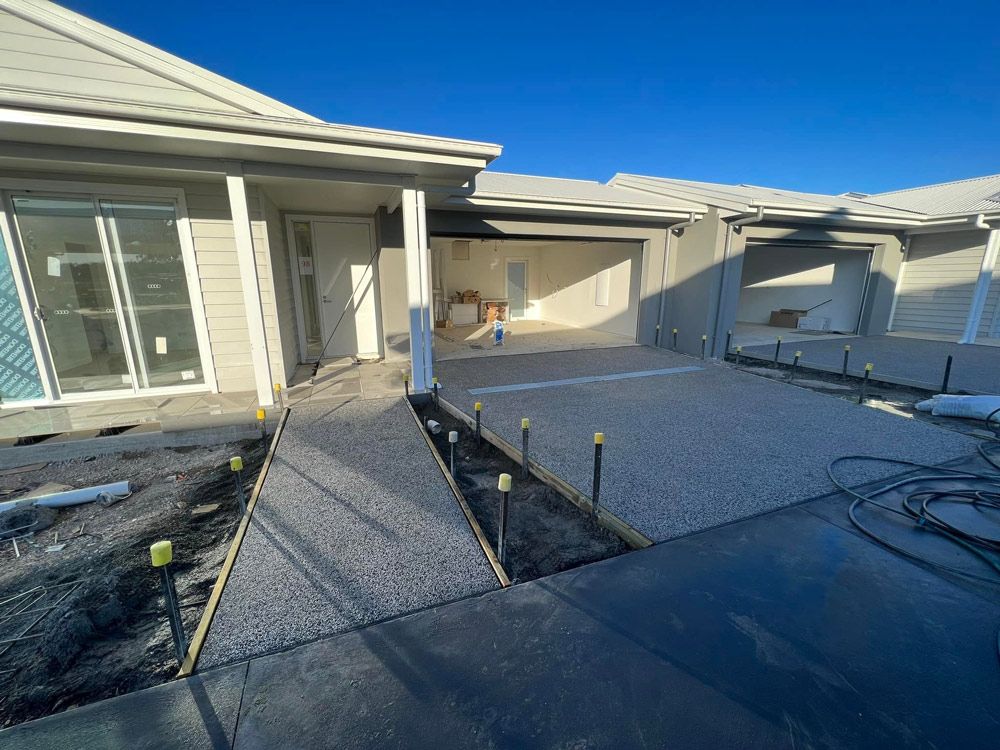
Exposed aggregate is a popular choice around Lake Macquarie because the stone finish offers natural slip resistance, which is handy near pools and in areas that cop coastal weather. Coloured concrete lets you match your patio to your home's palette, whether that's a warm sandstone tone or a deep charcoal. The finish you choose has a big impact on both aesthetics and slip resistance; our patio concreting service includes a range of finishes to suit different styles and budgets.
How Do You Plan Drainage on Lakeside & Low-Lying Blocks?
Drainage is the planning step that catches most homeowners out, and it matters more around Lake Macquarie than in many other regions. Plenty of blocks near the foreshore and surrounding suburbs sit low or hold water after heavy rain, so your patio needs to shed water away from the house rather than trap it.
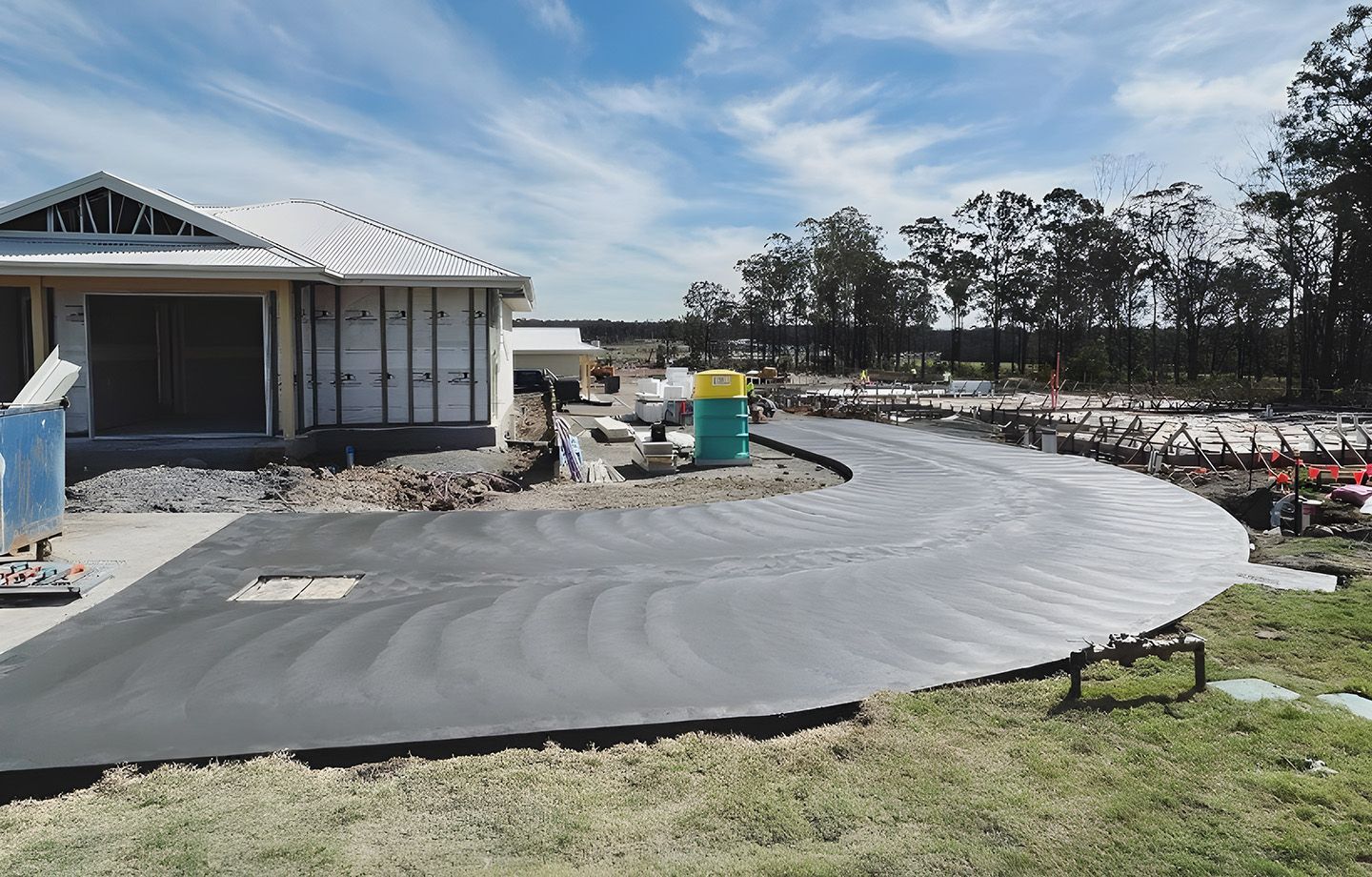
A properly planned slab includes a fall, which is a slight gradient that directs water towards lawns, garden beds or drainage points. On low-lying blocks, your concreter may also recommend strip drains along the slab edge or a channel drain where the patio meets the house. As an example, a homeowner on a flat block near the water might need a channel drain at the doorway and a two-degree fall towards the rear garden to keep the entertaining area dry through winter.
Do You Need Council Approval for a Concrete Patio in NSW?
In many cases, a ground-level concrete slab qualifies as exempt development in NSW, meaning no formal approval is required if it meets set criteria around size, height and location on the block. However, the rules change if your patio sits on flood-prone land, crosses an easement, connects to stormwater infrastructure or forms part of a larger covered structure.
Because parts of the Lake Macquarie area are mapped as flood-prone, it's worth checking your property's status with Lake Macquarie City Council before committing to a design. A reputable concreter will flag any obvious approval considerations during the site visit, but confirming requirements early keeps your project on schedule.
Concrete or Timber Decking: Which Is the Better Long-Term Choice?
Timber decking looks warm and natural, but it demands regular oiling, board replacement and pest management, particularly in humid coastal conditions. Concrete requires far less upkeep. A sealed slab handles sun, salt air and heavy foot traffic without splintering, warping or fading in the way timber can.
Concrete also offers flexibility that decking can't match. You can extend it, resurface it or build over it later, and it provides a stable base for pergolas, outdoor kitchens and spas. For homeowners weighing up lifetime cost rather than upfront price alone, an outdoor concrete slab in Lake Macquarie conditions generally proves the more durable investment.
How Do You Get an Accurate Quote?
An accurate quote starts with a site visit. Access for trucks and pumps, slope, soil condition, existing structures and the finish you've chosen all affect the final price, so treat any figure given sight unseen as a rough estimate only.
When comparing quotes, check that each one covers:
- Site preparation & excavation
- Formwork, reinforcement & concrete supply
- The specific finish & sealing you've requested
- Drainage provisions & clean-up
A detailed written quote protects both you and the contractor, and it makes comparing providers far easier than weighing up a single lump-sum figure.
How Should You Prepare Your Site Before Work Begins?
Once you've booked in, a little preparation keeps the job running smoothly. Clear furniture, pot plants and garden items from the work area, and confirm access points for equipment and concrete delivery. Let your concreter know about irrigation lines, pipes or cables you're aware of beneath the surface.
Fresh concrete also needs time to cure, so plan to keep pets, kids and vehicles off the new slab for the period your concreter recommends. Patience at this stage protects the finish for decades to come.
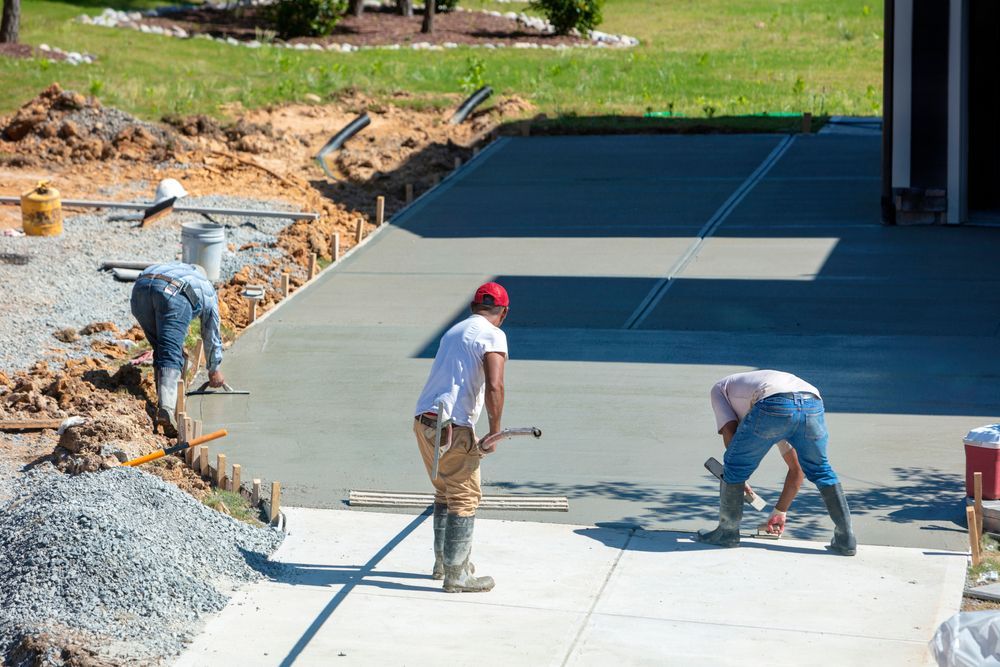
We at Coastal Kerb and Concrete handle every stage of the process, from site preparation and formwork through to pouring, finishing and sealing. Lake Macquarie's mix of sloping bush blocks, lakeside properties and low-lying suburbs means local drainage knowledge counts, and that's where our experience pays off. Ready to get started? Talk to the
concreters Lake Macquarie homeowners trust.
Contact us today for a free quote on your patio concreting project in Lake Macquarie or across the Central Coast.
Frequently Asked Questions
How long does a concrete patio take to install?
Most residential patios take between two and five days depending on size, site access and weather. This covers excavation, formwork, pouring and finishing. Full curing takes longer, so allow up to a week before placing heavy furniture on the slab.
How thick should a concrete patio slab be?
A standard residential patio slab is typically around 100mm thick with steel reinforcement. Your concreter may recommend a thicker slab if the patio will support a spa, outdoor kitchen or other heavy loads.
Can you concrete over an existing paved area?
Sometimes, but it depends on the condition and stability of the existing surface. In most cases, removing old pavers and preparing a fresh base delivers a stronger, longer-lasting result.
What is the most slip-resistant concrete finish?
Exposed aggregate offers strong natural grip, making it a common choice around pools and in coastal areas. Broom-finished plain concrete also provides good slip resistance at a lower price point.
Do concrete patios crack?
Concrete naturally moves over time, which is why professional concreters place control joints at planned intervals. These joints direct any movement to predet